How to Run a Handyman Business (2026): Licensing, Pricing and a Weekly System for a One-Person Shop
How to run a handyman business on your own: what to check before the first paid job, how to set prices that cover your time, and a weekly routine that keeps admin out of your evenings.
Running a handyman business comes down to three things: staying inside your state's licensing limits, pricing so every job pays for your drive and admin time, and having a routine for the work around the work. Check your state's rules first (in California, the exemption covers projects under $1,000 in total, materials included, that need no building permit and where you employ no one), set a minimum charge, and capture every job, promise and callback the moment it happens so nothing waits until 9 p.m.
Disclosure: Codot, a voice assistant that comes up in the admin section below, is our product. None of us is a handyman, and we won't pretend to be; the problems here come from trade forums, a 2026 survey of UK tradespeople and California statute text, linked where they appear.
TL;DR:
- Check licensing before you advertise. Each state sets its own rules. California's exemption, for example, only covers projects where the total for "labor, materials, and all other items is less than one thousand dollars ($1,000)", no building permit is needed and you employ no one (Cal. Bus. & Prof. Code §7048).
- Price for the whole trip, not the hour on site. A minimum charge covers driving, parking and the supply-store run that small jobs quietly eat.
- Most one-person shops don't fail on skill. They drown in the evening paperwork: quotes not sent, callbacks forgotten, materials not billed.
- A weekly routine fixes most of it: capture on site, quote within a day, invoice the same day, one hour on Friday for everything else. Codot handles the capture part by voice; it doesn't quote or invoice.
What actually goes wrong in a handyman business
Ask tradespeople what they'd change about running their own business and the work itself rarely comes up. The office does.
In a March 2026 survey of 167 UK small business owners, 77% of the tradespeople said they do admin in the evenings and nearly half at weekends (Electrical Times). Trade forums have said the same thing for twenty years. An electrical contractor on ECN's forum described working in the field all day and then having "office work to do at night". One contractor on Fine Homebuilding described job details living on "the back of an old envelope" (forum thread), and another named the worst part of the job as explaining to customers why "I couldn't keep my promise" (forum thread).
None of this is about being bad at the trade. A one-person handyman business has one person doing the job, answering the phone, quoting, buying materials and chasing payment, often on the same afternoon. The fixes below are about the second list.
Before your first paid job: the legal minimum
This part depends on where you work, so treat it as a checklist to look up, not legal advice.
Licensing. In the US, each state decides what a handyperson can do without a contractor's license, and the details matter. California is a good example of how specific the wording gets. Its exemption, in Business and Professions Code §7048, applies when "the aggregate contract price for labor, materials, and all other items is less than one thousand dollars ($1,000)", the work is "of casual, minor, or inconsequential nature" and it "does not require a building permit" (§7048). The same section says the exemption doesn't apply if you employ "another person to perform, or assist in performing, the work", or if a job is split into contracts under $1,000 "for the purpose of evasion". Advertising has its own rule: an unlicensed person may advertise only for projects under $1,000 and must state "that the person is not licensed" (§7027.2). The limit was raised from $500 to $1,000 by Assembly Bill 2622 (Statutes of 2024, Chapter 240), effective January 1, 2025 (AB 2622 bill text; CSLB announcement). The Contractors State License Board's announcement adds that penalties for unlicensed contracting "include administrative fines of up to $15,000, jail sentences of up to six months, and fines up to $5,000." Other states set their own rules, so read your state contractor board's guidance before you print business cards.
Registration and insurance. Most guides cover this well: register the business name, keep a separate bank account so business spending is easy to see, and ask an insurance broker about general liability cover for working in other people's homes.
Deposits. If you take one, keep it modest and check your state's rules. In California, for home improvement contracts with a contractor who is licensed or required to be, §7159.5 says the downpayment "shall not exceed one thousand dollars ($1,000) or 10 percent of the contract amount, whichever amount is less" (§7159.5).
How to price so the job actually pays
The fastest way to work hard and earn little is to price only the time you spend holding a tool.
A two-hour shelf install is rarely two hours, which is why our guide to apps for outside sales reps maps out how those hidden moments fit into a day in the field. There's the call to book it, the drive, parking, a stop for wall anchors, the drive back, and the invoice. If you only bill the two hours, you've given away the rest.
Three habits handle most of this:
- A minimum charge. Many handypeople set a minimum, such as a call-out fee or a minimum number of hours, so small jobs still cover the trip. Decide yours and state it upfront.
- Materials billed separately, with your time to fetch them. Write down every purchase the moment you make it, or it disappears into the business account.
- A target hourly figure from the top down. Decide what you need to earn in a year, divide by the hours you can realistically bill (not the hours you work), and check that against local competitors. For context, the US Bureau of Labor Statistics puts the median pay for employed general maintenance and repair workers at $48,620 a year in May 2024 (BLS). Self-employed, you also cover your own tools, van, insurance and unpaid admin hours, so your rate needs to sit well above an employee's hourly equivalent.
A weekly system for the work around the work
This is the routine I'd build if I were starting out. It's deliberately boring.
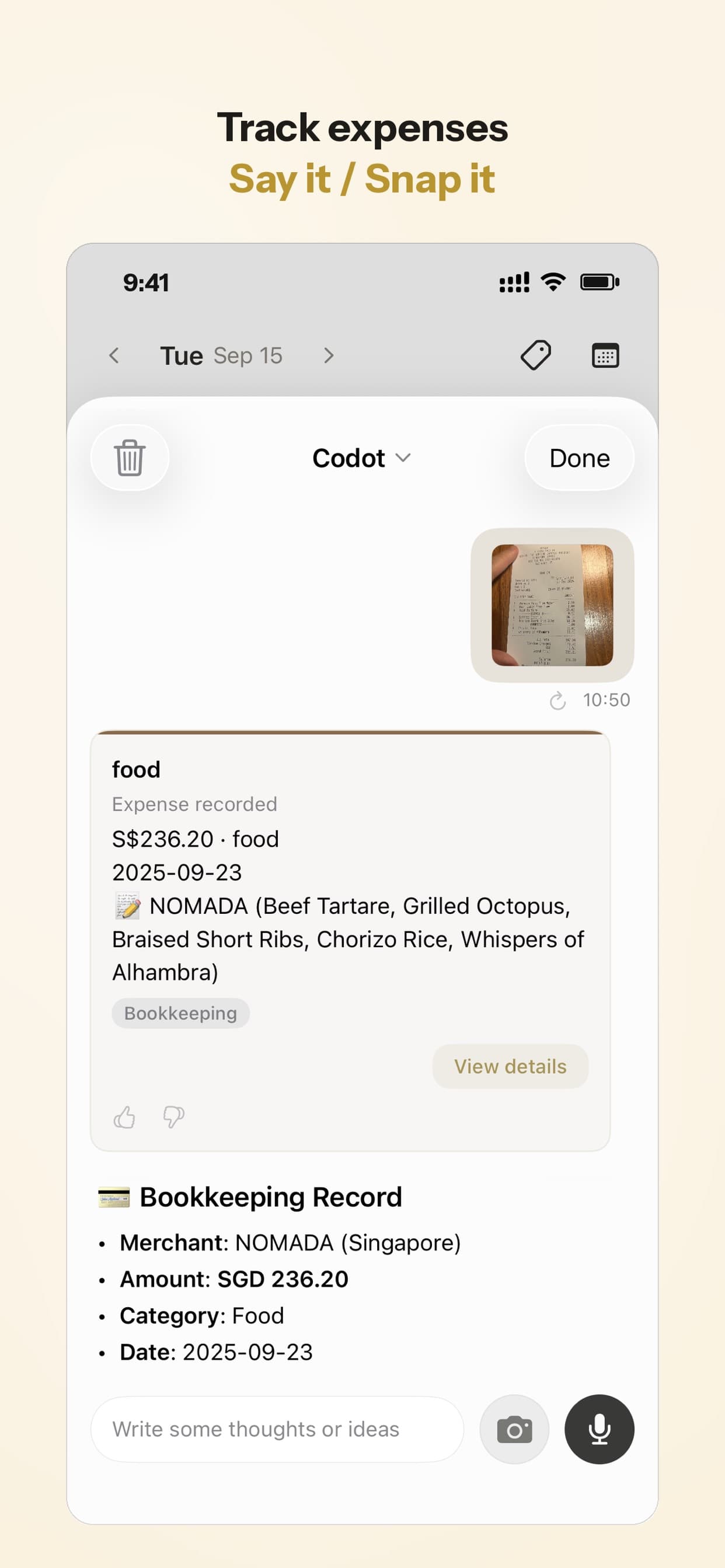
On site: capture everything immediately. The customer mentions a dripping tap in the other bathroom. You promise a price for the fence by Thursday. The hardware store is out of the hinges you need. Each of those is a future job or a broken promise unless it leaves your head right then, which is why a routine before, during and after visits is so effective. A notebook works if you'll actually open it. Many people won't with dirty hands, which is why voice works better.
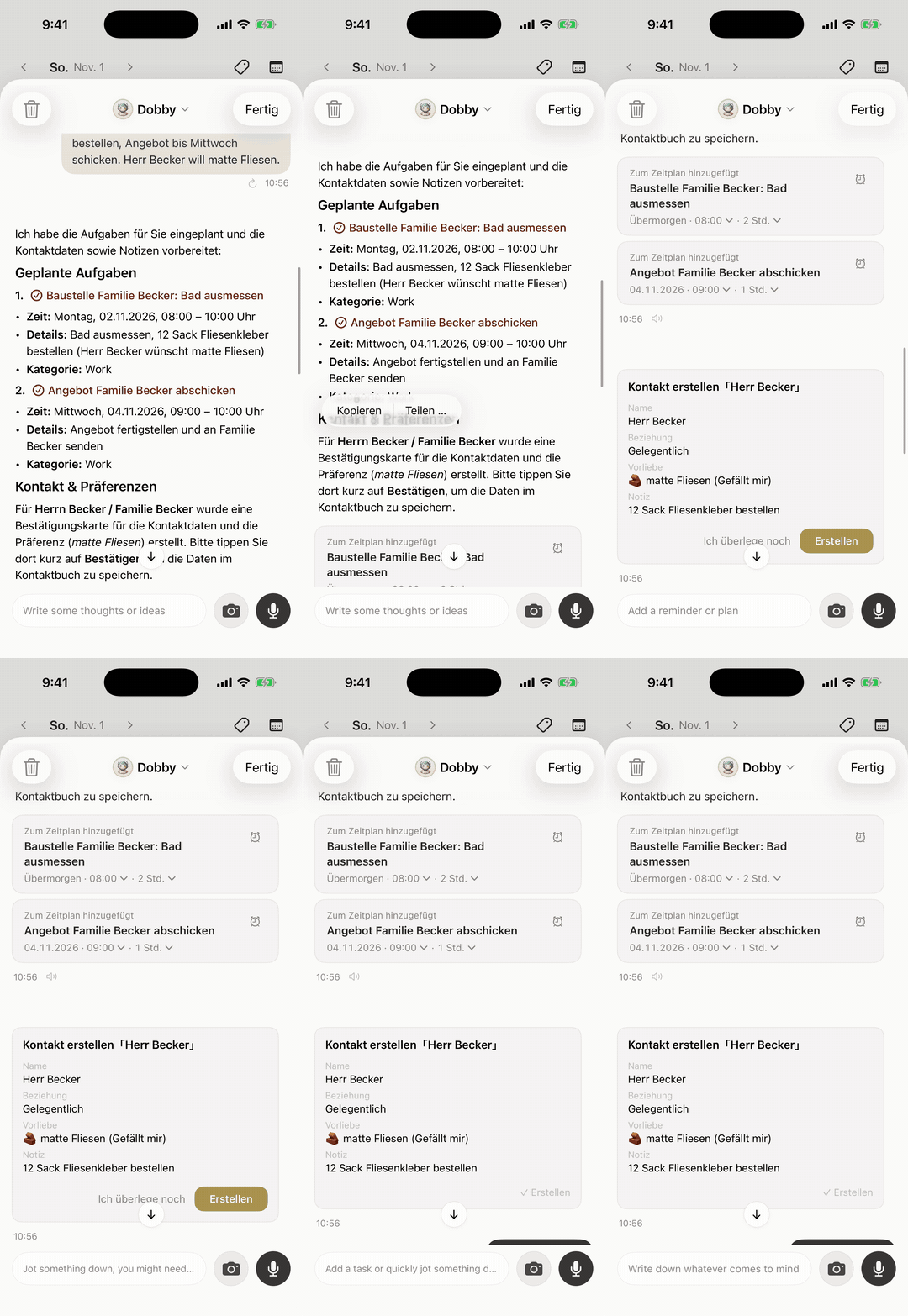
Quotes: within one working day. A quote that arrives a week later is competing with whoever replied first. If you can't send it the same evening, at least set a reminder for the next morning.
Invoices: the same day the job finishes. Every day you wait, the job gets less fresh in the customer's mind and the materials list gets harder to reconstruct.
Friday: one hour, at a desk. Chase unpaid invoices, confirm next week's jobs, reply to anything you left, and check that every promise from the week has a date on it.
Calendar: one, not three. Whiteboard, phone calendar and a notebook drift apart within a week. Pick one calendar everyone (you, your partner who answers the phone sometimes) can see.
Your ideas shouldn't wait for a keyboard. Just say it — Codot handles the rest.
Try Codot — It's Free →Where Codot fits in a one-person handyman business
The capture step is where I think most solo handypeople lose money, and it's the part Codot is built for. Codot is a voice-first AI personal assistant: you say one sentence and it files it.
- "Mrs. Lopez wants the bathroom tap looked at too, call her Monday" becomes a task with a reminder.
- "Send the Hendersons a fence quote by Thursday" becomes a reminder on Thursday morning.
- "Move the Patel shelving to Friday at 10" moves the calendar event.
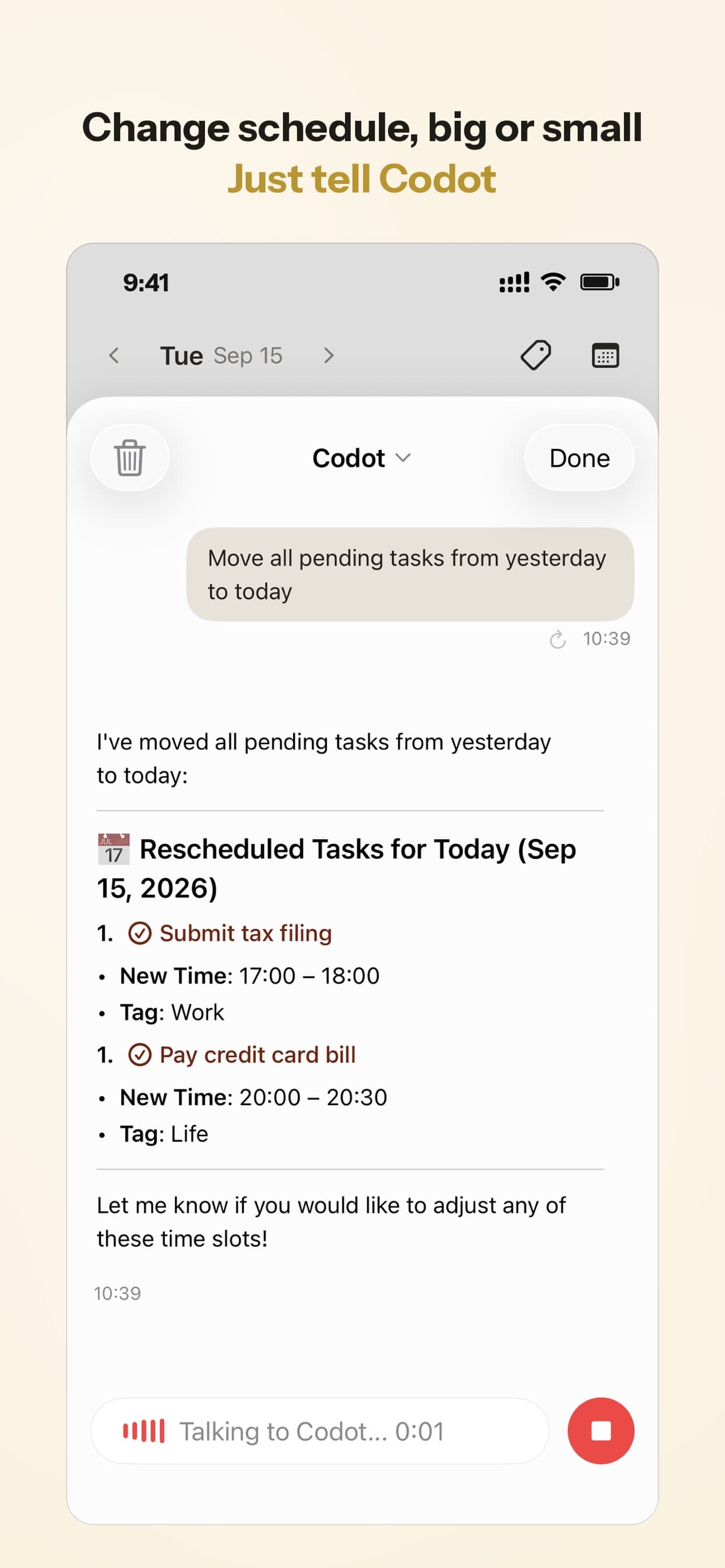
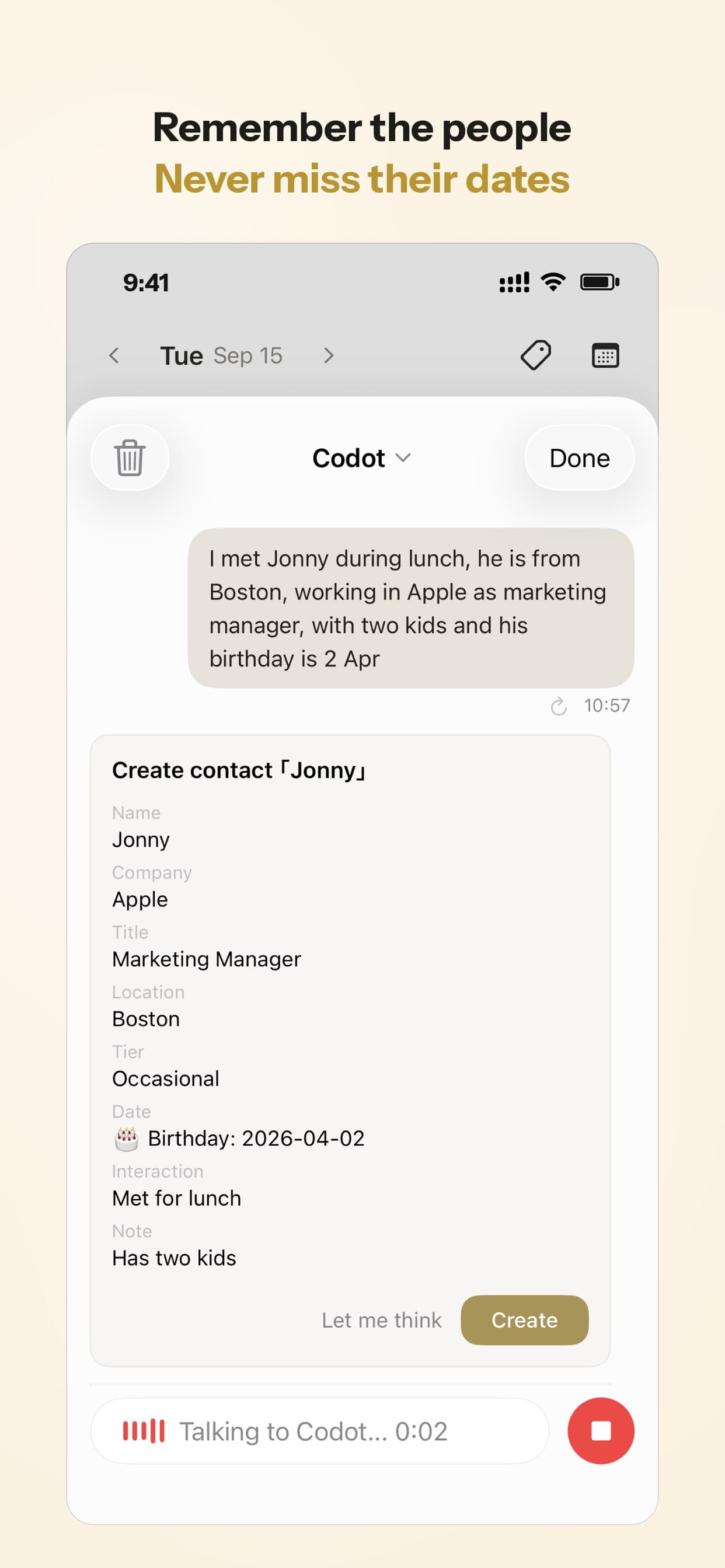
It syncs with Google Calendar and, on iPhone, with Apple Calendar and Apple Reminders, and sends a daily brief each morning of what's due. You can talk to it from an iPhone, Apple Watch, Android phone or the web, which matters when you're up a ladder. It also keeps notes on people, so "Henderson: side gate sticks, dog is friendly, pay on completion" is there next time they call. It understands most major languages, Spanish included.
What it doesn't do: quotes, invoices, payments, online booking or customer appointment confirmations. For those, use invoicing or field service software and treat Codot as the place where things go first. Price: Codot's free plan covers tasks, the calendar, notes, the personal CRM, habits, calorie logging and expenses. Reminders at a set time, repeating tasks, daily briefings, scheduled automations and email triage are part of Codot Max ($12.99 a month or $99.99 a year, with 20x the free plan's usage). Every new account gets 7 days of Max free, then drops back to the free plan without charging you.
If you're choosing the rest of your setup, our contractor scheduling app comparison covers free calendars, Jobber and Housecall Pro, and the virtual assistant guide compares a human VA, an AI receptionist and a voice assistant on cost.
Getting work without paying for leads
For a local service, the cheapest channels are usually the closest ones:
- A Google Business Profile with your service area, a few photos of finished work and a phone number you actually answer.
- Reviews, asked for at the right moment. The best time is when the customer is looking at the finished job. Send the review link that day, not next week.
- A narrow first offer. Start-up guides from Shopify and Housecall Pro both suggest carving out a niche, such as painting or furniture assembly, instead of offering "anything." It's easier to price, easier to describe and easier to recommend.
- Repeat customers. A note of what each customer mentioned for "next time" turns one job into three. That's the same capture habit again.
Is a handyman business profitable?
It can be, and the margin usually comes from the boring parts. Skilled handypeople with full calendars still lose money on unbilled materials, unpaid drive time, quotes sent too late and callbacks never made. If your rate covers the whole trip, your invoices go out the same day and nothing you promise relies on memory, the work itself takes care of the rest.
For Australian readers, our apps for tradies guide covers the local job software options.
FAQ
Do I need a license to start a handyman business?
It depends on your state and the job. In California, the exemption covers projects under $1,000 in total, materials included, that need no building permit, where you employ no one, and any advertising must say you're not licensed. Other states have different rules, so check your state's contractor licensing board before advertising.
How much should a handyman charge?
Work from the year down: what you need to earn, divided by hours you can realistically bill, then compare with local rates. Add a minimum charge so short jobs cover travel, and bill materials separately.
Can I start a handyman business with no experience?
Many people start by offering a short list of jobs they already do well, then add services as they learn. Stay within what your state allows without a license, and don't take work you can't do safely.
How is Codot different from Jobber?
Jobber runs the business workflow: quotes, scheduling, invoices and payments. Codot catches what you say on the job (follow-ups, promises, reschedules, customer notes) and turns it into tasks, reminders and calendar entries. A one-person shop could use both.
If you'd like to stop losing jobs between the driveway and the evening paperwork, Codot is on the App Store and Google Play.
Field & Trades Desk
This article was created with AI assistance and reviewed by our editorial team.Learn about our content process.