Best CRM for a Handyman Business (2026): Free and Cheap Options Compared
The best CRM for a handyman business, from free (HubSpot, a spreadsheet, Codot) to Joist, Jobber, Markate and Housecall Pro, with verified November 2026 prices.
For a one-person handyman business, the best CRM is usually the cheapest one that covers your real bottleneck. If quotes and invoices eat your evenings, Joist (from $10 a month) or Jobber Core ($29 a month billed annually) earns its price. If the problem is forgetting customer details and callbacks, a free option such as Codot, HubSpot's free CRM or a spreadsheet is enough to start.
Disclosure: Codot is our product, and it's one of the options below. Prices come from each company's own pricing page, checked November 3, 2026. Codot is a personal CRM and assistant, not quoting or invoicing software, and we say where that matters.
TL;DR:
- Most solo handymen need a CRM for two jobs: getting paid (quotes, invoices, payments) and remembering customers (who they are, what you did, when to call back). Pick based on which one is hurting.
- Codot remembers customers by voice: say "Linda on Oak Street, gate code 2580, the hallway is Agreeable Gray, call her in March about the fence" and it saves the contact note, sets the follow-up and puts it on your calendar. Contact notes, tasks and calendar are free; the timed reminder, briefings and automations are in Codot Max. It doesn't quote, invoice or take payments.
- Joist is the cheapest way to send estimates and invoices ($10 a month, up to 5 documents a month). Jobber Core ($29 a month billed annually) adds online booking and scheduling for one user.
- Markate ($45.95 a month billed annually) and Housecall Pro ($59) add review requests and more automation. HubSpot's free CRM and a Google Sheet cost nothing but know nothing about jobs.
What a handyman actually needs from a CRM
Sales CRMs were built for people who chase deals through a pipeline. A handyman's customers mostly find you, book a small job, and come back months later for another one. The work that slips is different:
- The quote you meant to send tonight and sent on Friday, after they'd hired someone else.
- The invoice that went out three weeks late.
- The detail you can't remember when the customer calls back: which door, which hinge finish, whether the dog bites, what they said about the deck.
- The "call me in spring about the fence" that never turns into a job, because no one called in spring.
The first two are paperwork, and field service software exists for them. The last two are memory, which is where a one-person shop wins or loses most repeat work. A good setup covers both, and it doesn't have to be one product. The wider weekly system is in How to Run a Handyman Business (2026); this piece covers the customer side for a solo or two-person shop. Crews and general contractors need dispatch and job costing, which changes the best CRM for contractors picks.
Codot: a customer memory you talk to
Codot is a voice-first AI assistant, recently named a best AI assistant for freelancers for its ability to manage the 'work between projects' like follow-ups and email triage. You say one sentence and it does the filing: it creates tasks, calendar events and follow-ups, keeps notes about people, triages your Gmail or Outlook inbox and drafts replies to the important emails, sends a daily briefing each morning, and runs scheduled automations.
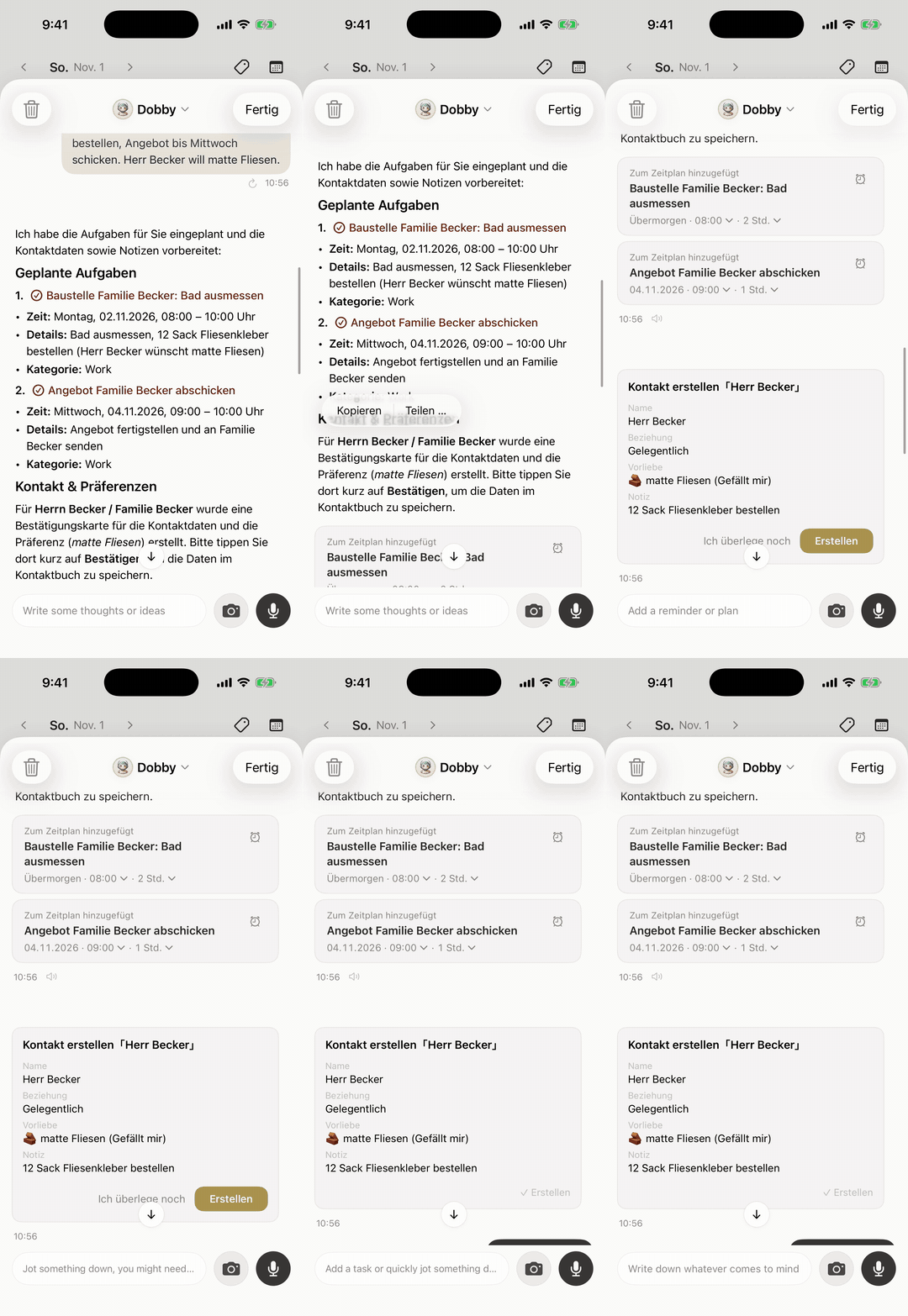
For a handyman, the useful part is the personal CRM. Here's the kind of moment it's built for. You've just finished swapping a storm door, the customer walks you to the van and mentions the back fence is leaning and she'll want it looked at "once the ground thaws." You have paint on your hands and the next job in 25 minutes. You press the Lock Screen widget (or tap your Apple Watch) and say:
"Linda Moreno, 14 Oak Street. Gate code 2580, the dog's friendly. Hallway paint is Agreeable Gray. Wants a quote on the back fence in early March. Remind me March 3."
Codot saves those details on Linda's contact, creates the follow-up for March 3, and puts it on your Google Calendar. In March, the reminder comes with the context attached, so the call starts with "you mentioned the fence by the side gate" instead of "sorry, which house was it?"
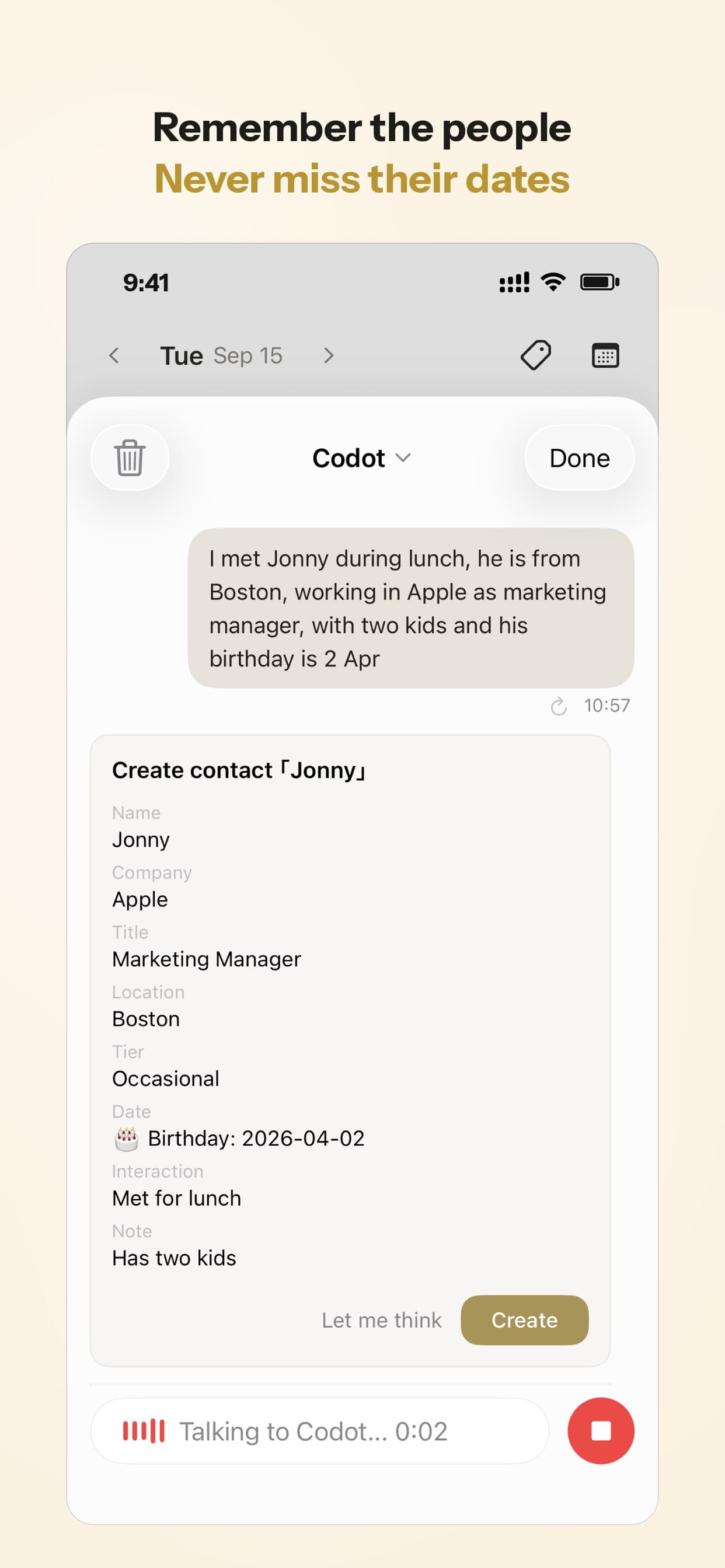
It also takes "Order 3-inch hinges for the Patel job before Thursday" or "Move Tuesday's drywall patch to Wednesday at 9," and logs an expense when you snap a receipt. It runs on iPhone (with Apple Watch and the Lock Screen widget), Android and the web, understands most major languages including Spanish, and on iPhone can send tasks to Apple Calendar and Apple Reminders.
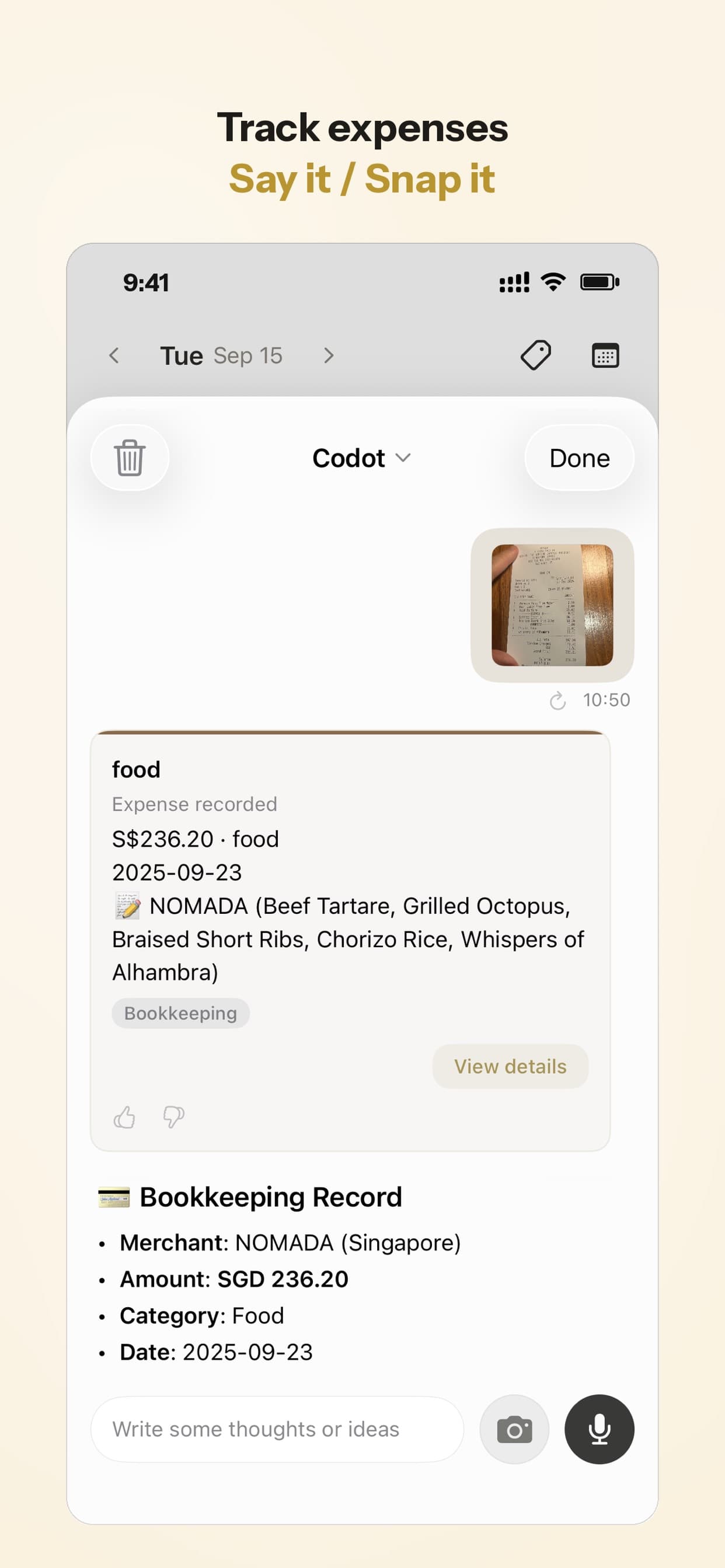
Price: Codot's free plan covers tasks, the calendar, notes, the personal CRM, habits, calorie logging and expenses, so Linda's contact, the calendar entry and the receipt are free. The "remind me March 3" alert is a reminder at a set time, which, like repeating tasks, daily briefings, scheduled automations and email triage, is part of Codot Max ($12.99 a month or $99.99 a year, with 20x the free plan's usage). Every new account gets 7 days of Max free, then drops back to the free plan without charging you.
What Codot doesn't do. Its CRM remembers people, conversations and follow-ups. It has none of the business-CRM side: sales pipeline, quotes, estimates, invoicing, payments, job costing, team dispatch, online booking or a customer portal. If you want to get paid through your CRM, pair Codot with Joist or Jobber, or use one of those alone.
Joist: cheapest way to send estimates and invoices
Joist is estimate-and-invoice software for contractors. On the Joist pricing page (as of November 3, 2026), Basics is $10 a month and covers up to 5 documents a month with online payments and homeowner financing. Pro ($17 a month) removes the document limit and adds unlimited clients with activity tracking. Elite ($32) adds change orders and Joist Reviews. Scheduling only arrives with the new Run plan at $70 a month. Annual billing is two months free, the old free plan is gone, and there's a 14-day trial.
We'd pick Joist when the thing you hate is the paperwork after a job. It's the least you can pay to look professional on paper, but below the Run plan it won't book or schedule anything.
Jobber: the full job workflow for one person
Jobber connects requests, quotes, scheduling, invoices and payments. Jobber's pricing page (as of November 3, 2026) lists Core at $29 a month billed annually, $39 on a one-year commitment paid monthly, or $49 with no commitment, for one user. Core covers online booking, scheduling, quotes, invoicing with online payments and a website. Automated reminders and quote and invoice follow-ups start on Connect ($99 billed annually), and review tools are an add-on. Card payments are 2.9% + 30¢. There's no free plan; the trial gives 14 days on the Grow plan without a card.
We'd start a growing solo business on Jobber if you're re-typing the same customer into a notebook, a calendar and an invoice app. Its app also has Jobber AI Voice (beta), which can create jobs and add or reschedule visits by voice inside Jobber.
Markate: owner-operator pricing with add-ons
Markate's Owner Operator plan (Markate pricing, as of November 3, 2026) is $49.95 a month, or $45.95 a month billed annually ($551.40 a year). It includes customer management, estimates that convert to work orders and invoices, online payments and drag-and-drop scheduling. Automated review requests are a $10-a-month add-on, and employees are $5 each per month. There's a 14-day trial and no free plan.
It's priced between Jobber Core and Housecall Pro, which makes it worth a trial if Jobber Core feels thin and Housecall Pro feels like too much.
Your ideas shouldn't wait for a keyboard. Just say it — Codot handles the rest.
Try Codot — It's Free →Housecall Pro: reviews and marketing built in
Housecall Pro (as of November 3, 2026) starts at Basic, $59 a month billed annually or $79 monthly, for one user. Basic already includes online booking, scheduling and dispatch, estimates and invoicing, payments and consumer financing, job costing and review management. Essentials ($149, five users) and Max ($299, eight users) add routing, GPS tracking and service plans. There's a 14-day trial of Max without a credit card.
It's the most expensive starting point here and the only one with review requests in the base plan, which matters if most of your work comes from Google reviews.
Workiz: strong on phones, no public price
Workiz bundles scheduling, estimates, invoices, online payments, a client portal and phone tools. Its pricing page (as of November 3, 2026) lists three plans with "Request pricing" buttons, a 7-day trial, and review management sold separately. Needing a sales call to learn the price is reason enough for a one-person shop to look at the others first.
HubSpot free CRM and a spreadsheet: free, but they don't know what a job is
HubSpot's free CRM (as of November 3, 2026) is free for up to 2 users and 1,000 contacts, with pipelines, a mobile app, Gmail and Outlook connections and one meetings link. Payments start on Starter ($7 a month per seat on an annual plan, $10 month to month). It's a solid contact database designed around sales deals, so you'll be bending "deal stages" into "quoted, booked, done."
A Google Sheet with columns for name, address, job, notes and next follow-up is free and works until you're on a roof and need to add something, or forget to check the follow-up column.
Side by side
Prices as of November 3, 2026, from each official pricing page.
| Starting price | Free plan | Quotes / estimates | Scheduling | Invoices + payments | Review requests | Voice input | |
|---|---|---|---|---|---|---|---|
| Codot | Free plan; Max $12.99/mo or $99.99/yr (20x usage) | Yes: tasks, calendar, notes, CRM, habits (no reminders at a set time, briefings, automations or email triage); 7-day Max trial | No | Via Google Calendar | No | No | Yes (notes, tasks, events) |
| Joist | $10/mo (5 docs) | No (14-day trial) | Yes | Run plan ($70) only | Yes | Elite ($32) | No |
| Jobber | $29/mo billed annually | No (14-day trial) | Yes | Yes | Yes | Add-on | AI Voice beta (jobs, visits) |
| Markate | $45.95/mo billed annually | No (14-day trial) | Yes | Yes | Yes | $10/mo add-on | Not checked |
| Housecall Pro | $59/mo billed annually | No (14-day trial) | Yes | Yes | Yes | Included | Not checked |
| Workiz | Not published | No (7-day trial) | Yes | Yes | Yes | Add-on | Not checked |
| HubSpot | Free (2 users) | Yes | Not on free plan | 1 meetings link | Payments on Starter | No | No |
| Spreadsheet | Free | Yes | No | No | No | No | No |
How we'd choose
You're solo and the problem is remembering people and callbacks. Start with Codot. Its free plan covers contact notes, tasks and calendar, and every customer detail and "call me in spring" goes in by voice in the moment you hear it.
You're solo and quotes or invoices go out late. Joist Basics or Pro if you don't need scheduling. Jobber Core if you also want online booking and one place for the whole job. Add Codot on top if you still lose the small details, since a quote tool won't remind you that the gate code changed.
Reviews drive your work. Housecall Pro Basic, since review management is in the base plan. Markate is cheaper if you're happy paying the $10 add-on.
You want a free contact list and nothing else. HubSpot's free CRM or a spreadsheet. Neither will chase a follow-up for you.
Related reading: hiring a VA versus using an AI assistant, contractor scheduling apps, and remembering people without maintaining a database.
FAQ
Is there a free CRM for a handyman business?
Yes. HubSpot's CRM is free for up to 2 users and 1,000 contacts, a spreadsheet is free, and Codot's free plan covers contact notes, tasks and calendar (timed reminders, daily briefings, automations and email triage need Codot Max). None of the free options send quotes or invoices; Joist ($10 a month) is the cheapest paid tool that does.
What is the best CRM for a small handyman business?
For one person, Jobber Core ($29 a month billed annually) covers booking, quotes, invoices and payments in one place. If you only need estimates and invoices, Joist is cheaper. If your main problem is forgetting customer details and follow-ups, Codot handles that by voice.
How is Codot different from Jobber?
Jobber runs the paperwork side of a job: requests, quotes, scheduling, invoices and payments. Codot remembers your customers and follow-ups: you say what you learned, and it saves the note, sets the reminder and adds it to your calendar. Codot has no quotes, invoices or payments, so a handyman could reasonably use both.
If you want every customer detail saved the moment you hear it, Codot is on the App Store and Google Play.
Founders & Professionals Desk
This article was created with AI assistance and reviewed by our editorial team.Learn about our content process.