Codot vs Tiimo
Codot: say it, and your assistant handles it.
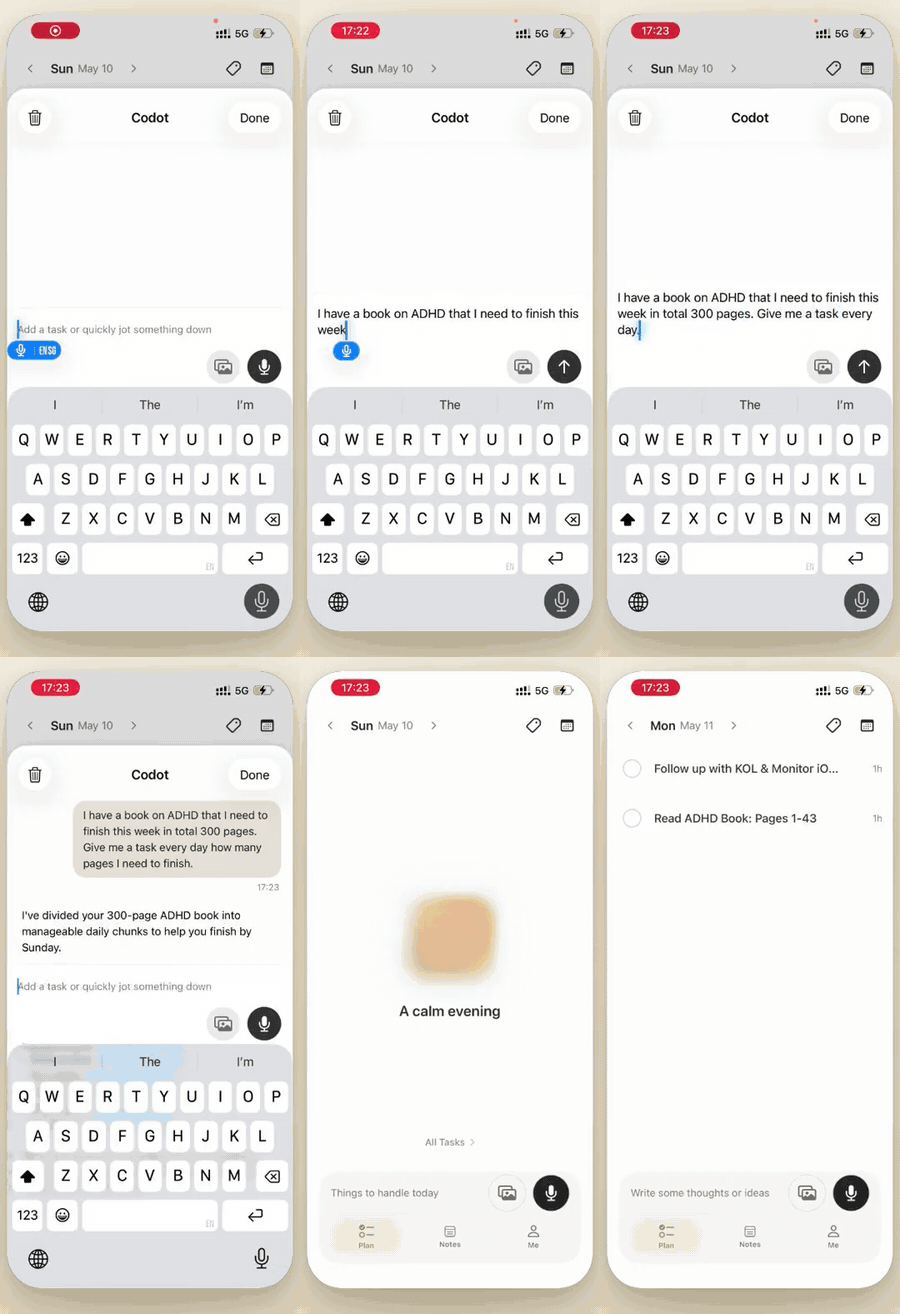
Codot is an AI personal assistant for iPhone, Apple Watch and the web. Tell it what's going on in plain words and it acts: creates tasks and events, moves them when plans change, breaks big goals into daily steps, remembers the people you meet, triages Gmail and Outlook with draft replies, and sends you a briefing every morning. Free for a limited time.
Tiimo: a visual planner built for neurodivergent minds.
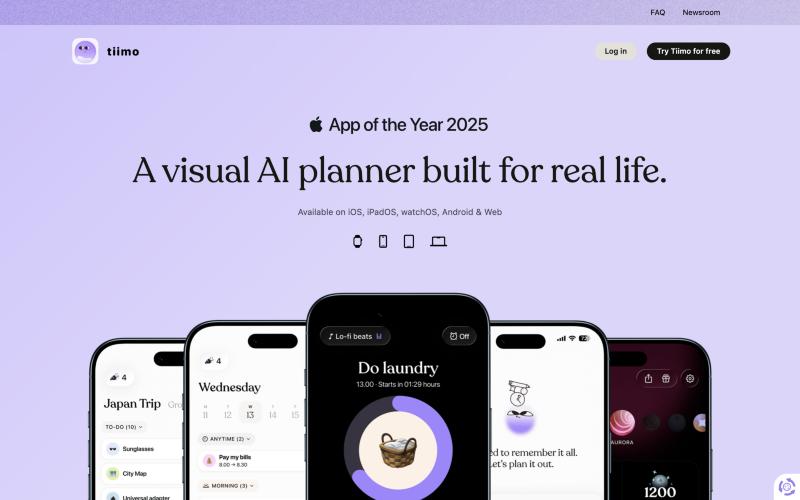
Tiimo lays your day out as a visual timeline, with an AI co-planner that splits tasks into steps and estimates time, plus a focus timer, routines and mood check-ins. Apple's iPhone App of the Year 2025. Free plan; Tiimo Pro is paid.
See them side by side
Codot
Tiimo
| Feature | Codot | Tiimo |
|---|---|---|
| AI Assistant | ||
| Talk in plain language, it takes the action Tiimo: add tasks via Siri shortcuts | Yes | Partly |
| Reschedule by voice ("move it to Monday") | Yes | Not listed |
| Break a big goal into daily steps Tiimo's AI co-planner splits tasks and estimates time | Yes | Yes |
| Find a meeting time across time zones | Yes | Not listed |
| Remember people (personal CRM) | Yes | Not listed |
| Email triage with draft replies (Gmail / Outlook) | Yes | Not listed |
| Morning briefing | Yes | Not listed |
| Scheduled automations | Yes | Not listed |
| Planning | ||
| Visual timeline | No | Yes |
| Focus timer and mood check-ins | No | Yes |
| Habits and routines | Yes | Yes |
| Google Calendar sync Tiimo imports Apple, Google and Outlook calendars | Yes | Yes |
| Platform & Access | ||
| Lock-screen widget and Apple Watch | Yes | Yes |
| Web app Tiimo web planner requires Pro | Yes | Yes |
| Android app Both have Android apps | Yes | Yes |
| Free plan | Yes | Yes |
| Pricing | ||
| Free plan | Yes | Yes |
| Paid plan | Free for a limited time; later free plan (3 daily briefings, 2 scheduled automations) or Max $12.99/month / $99.99/year | Free plan; Tiimo Pro paid (US App Store: $7.00-$54.00, varies by region; 7-day trial on yearly), as of October 2026 |
The Verdict
CCodot Wins On
- An AI assistant you talk to: it creates, moves and organizes things for you
- Handles more than your schedule: people, email triage, notes
- Morning briefing and scheduled automations that run on their own
- Capture from the lock screen, Apple Watch, iPhone and web
TTiimo Wins On
- Visual timeline of your day
- Focus timer and mood check-ins
Choose Codot if: Busy people, founders and ADHD brains whose tasks are mixed up with people, email and plans that keep changing, and who want an assistant to handle the organizing.
Choose Tiimo if: People with ADHD or autism who mainly need to see their day laid out and get help moving through it block by block.
Who Should Use Which?
Founders and busy professionals
One sentence covers tasks, calendar changes, follow-ups with people and email, without opening five apps.
Try Codot Free →ADHD brains who forget before they write it down
Say it from the lock screen or your watch the moment it comes up; the assistant files and schedules it.
Try Codot Free →People who struggle to feel time passing
The visual timeline and focus timer are built for exactly that.
Codot vs Tiimo: a planner you fill in, or an assistant that plans for you?
I make Codot, so read this with that in mind. Tiimo is a very good visual planner, and Apple named it iPhone App of the Year for 2025. The real difference is who does the work. In Tiimo, you build your day on a timeline and the app helps you see it. In Codot, you say what's going on and an AI assistant does the organizing: it creates the tasks, puts them on your calendar, moves them when plans change, and reminds you. Tiimo facts below come from tiimoapp.com and its App Store page, checked in October 2026.
What Codot does that a planner doesn't
You talk, it acts. "Remind me to call the dentist tomorrow at 9" becomes a task at 9:00 with a reminder. Say "move the dentist call to Monday 3pm" and it moves it. No form, no dragging blocks around.
Big goals become a daily plan. Say "I have a 300-page book to finish this week" and Codot splits it into a reading slot for each day and schedules them.
It works out the tricky scheduling. "Find a time this weekend for New York, London and Singapore" comes back as one slot that fits everyone's daytime.
It remembers people, not just tasks. "I met Leo at a dinner party, he works in climate tech, his birthday is June 20" becomes a contact with those details, so the follow-up and the birthday reminder don't depend on your memory.
It watches your inbox. Codot triages Gmail and Outlook and drafts replies to the important messages, so email turns into tasks instead of a second to-do list you never open.
It starts your day for you. A morning briefing lists what's due, and scheduled automations run on their own, for example a 9 a.m. summary of your top task and the news you follow.
It's there when the thought hits. Speak from the lock-screen widget, your Apple Watch, the iPhone app or the web, and it syncs with Google Calendar.
What Tiimo does well
Tiimo is built for ADHD and autism around one idea: seeing time. Its visual timeline shows the day as blocks, the AI co-planner turns a task into steps and estimates how long each takes, and a focus timer plus mood check-ins help you start and switch. It also runs on Android. If what you struggle with is feeling time pass, that design is the point.
Try saying this (30 seconds)
Open Codot from the lock screen and say: "Pick up the dry cleaning after work, remind me Friday to book the vet, and move my 3pm call to tomorrow." You get two tasks with reminders and a moved event, and they show up on your calendar. That's the job Codot is built for: turning a messy sentence into a sorted day.
Tiimo app price vs Codot
As of October 2026:
- Tiimo: free plan with limited features; Tiimo Pro is paid, with a 7-day trial on the yearly plan. Prices vary by region (US App Store in-app purchases range from $7.00 to $54.00).
- Codot: free for a limited time. After that, a free plan (3 daily briefings, 2 scheduled automations) or Max at $12.99/month or $99.99/year with no limits.
Which one I'd pick
If your tasks die before they reach any planner, or your to-dos are tangled up with people, email and plans that keep changing, pick Codot: you get an assistant, not another app to keep up to date. If what you need is to see your day laid out and get nudged through it block by block, Tiimo is excellent at that. Some people use both: Codot to catch and sort everything during the day, Tiimo to look at the plan. More options in our guide to the best AI agents for ADHD in 2026.
Frequently Asked Questions
Tiimo is a visual planner: you build your day on a timeline and it helps you follow it. Codot is an AI personal assistant: you say what's going on and it creates and moves tasks and events, remembers people, triages your email and sends a morning briefing. Tiimo helps you see your day; Codot does the organizing for you.
An AI assistant. You don't fill in forms: you speak or type a sentence and it takes the actions, such as creating a reminder, rescheduling an event, breaking a goal into daily steps or saving notes about a person. It doesn't browse websites or buy things for you.
As of October 2026 Tiimo has a free plan with limited features and a paid Tiimo Pro with a 7-day trial on the yearly plan. Prices vary by region; US App Store in-app purchases range from $7.00 to $54.00.
Codot is free for a limited time. After that it keeps a free plan with 3 daily briefings and 2 scheduled automations, and Max costs $12.99/month or $99.99/year. It's on iPhone, Apple Watch, Android and the web.
Yes. Many people will use Codot to catch and sort everything during the day by voice, synced to Google Calendar, and keep Tiimo for the visual view of the plan.
Other Comparisons
Get Your Codot Agent and give yourself 1 hour per day now
Say it, done — the only free AI that turns your voice into organized, automated task management in most major languages.
Feedback or request for features? Write to Founder directly